
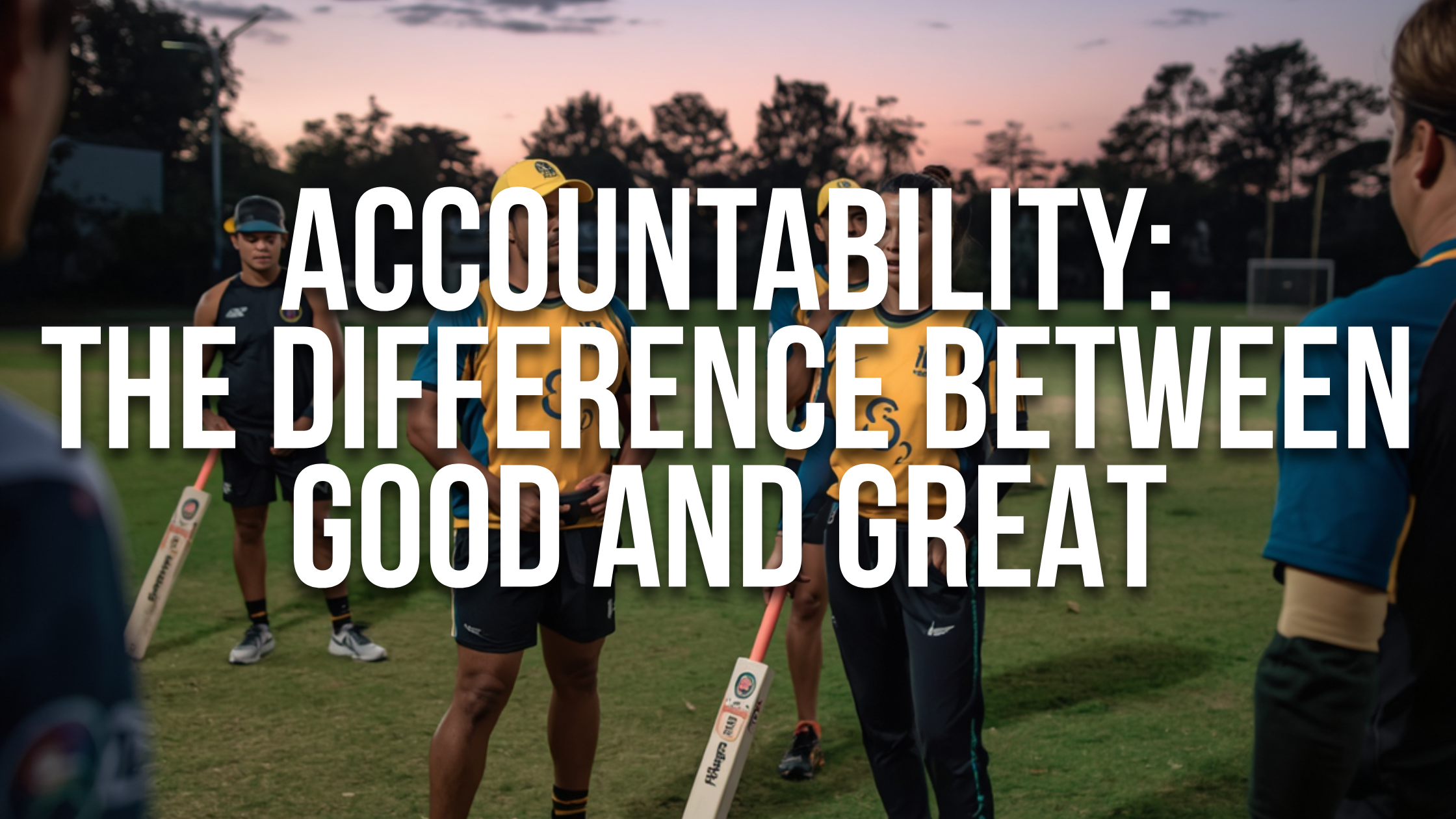
Accountability: The Difference Between Good and Great
One thing I’ve noticed through coaching is that the small things often tell you everything you need to know about an athlete. Not their cover drive. Not their bowling action. Not how many runs they scored on the weekend. The small things often reveal far more about a player’s future than the obvious things everyone notices.
Recently, during some fitness work, I noticed a few players not quite getting to the line. They were stopping a metre early, cutting corners, or easing off before the repetition was fully completed. Now, the reality is that missing the line by a metre probably won’t affect the outcome of that particular fitness drill. Nobody suddenly becomes slower, weaker, or less fit because they stopped one step short.
But that’s not really the point.
The point is the habit that is being created.
What I’ve realised through coaching is that habits rarely stay isolated to one area of performance. The player who cuts a corner in fitness often cuts a corner somewhere else. The same mindset can show up in batting, bowling, fielding, recovery, preparation, or decision-making. The standards we choose to accept in the small moments eventually become the standards we accept in the important moments.
This is why accountability matters.
When a batter is 40 not out and everything is going well, discipline feels easy. The challenge comes when they have been at the crease for two hours, their legs are tired, concentration is fading, and the opposition is building pressure. At that point, batting is no longer purely a technical skill. It becomes a test of discipline, patience, and accountability.
Can the player continue making good decisions?
Can they keep doing the basics well?
Can they maintain their concentration for one more over, one more spell, one more session?
Often, the difference between a good-looking 30 and a hard-earned hundred has very little to do with talent. More often than not, it comes down to a player’s ability to maintain their standards for longer than everyone else.
The same lesson applies in the field. It’s easy to have great energy when your team is taking wickets and everything is going your way. It’s much harder when the opposition has built a partnership and you’ve spent two hours in the sun chasing the ball. Yet these are the moments that reveal a player’s character.
Can you still sprint after every ball?
Can you still communicate positively with your teammates?
Can you still maintain intensity when nobody would blame you for dropping it?
These moments are often where matches are won and lost.
Bowling provides another great example. Many bowlers can produce a brilliant over. Plenty of players can generate energy for six balls. The best bowlers, however, are able to sustain that focus, discipline, and effort throughout an entire spell. They continue executing their plans when they are tired. They continue competing when the batter is fighting back. They continue showing up to every delivery with intent and purpose.
Sometimes the difference between taking three wickets and taking five wickets is not talent at all. It is the ability to maintain standards for longer periods of time.
The best athletes usually understand something that others overlook. Success is rarely built on one extraordinary moment. It is built on thousands of ordinary moments handled exceptionally well. Small decisions. Small habits. Small acts of discipline repeated consistently over time.
The boring work compounds.
The extra metre compounds.
The extra sprint compounds.
The extra effort compounds.
Eventually those small actions become confidence. They become resilience. They become trust in yourself. Most importantly, they become part of your identity.
Accountability is simply doing what you said you would do, even when it becomes uncomfortable. It is finishing the repetition properly. It is getting all the way to the line. It is maintaining your shape on the final ball of training just as well as you did on the first. It is holding yourself to a high standard when nobody else is watching.
Most players want the rewards that come from success. The very best players learn to embrace the responsibilities that come before it.
So next time you’re training, ask yourself a simple question:
“Did I complete the rep, or did I complete most of the rep?”
Because excellence often lives in that final metre.
And over time, that final metre is often what separates the good players from the very best.
0 Comments